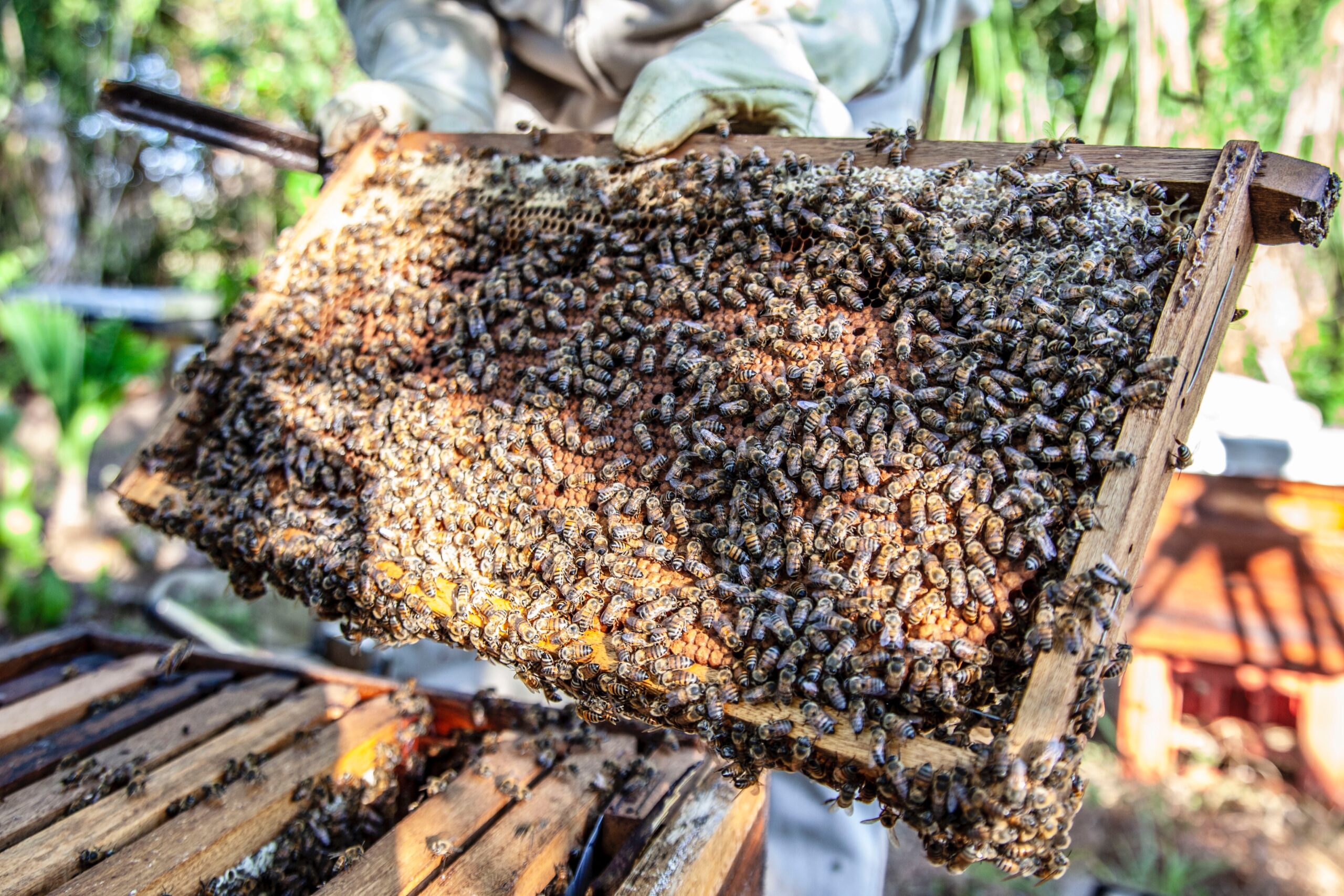
Bees, with their dynamic nature and crucial role in pollination, are among our planet’s most intriguing and essential insects. There’s much more to these buzzing wonders than meets the eye.
In this exploration, we’ll delve into the diverse world of bees, examining the different types and their unique characteristics.
Honey Bees
The quintessential image of a bee often conjures up the iconic honey bee. Belonging to the Apidae family, honey bees are social insects that live in colonies comprising a queen, worker bees, and drones.
Examples include the western honey bee, (Apis mellifera) and eastern honey bee (Apis cerana). Their primary claim to fame is honey production.
Honey bees meticulously collect nectar from flowers, transforming it into honey through a complex process of regurgitation and evaporation. Apart from honey, they play a vital role in pollination, contributing to the reproduction of numerous plants.
Bumble Bees
Known for their larger size and distinctive fuzzy appearance, bumble bees are members of the Apidae family as well. Unlike honey bees, bumble bees are social insects with smaller colonies, typically consisting of a few hundred individuals. Examples include Buff-tailed bumblebee (Bombus terrestris), White-tailed bumblebee (Bombus lucorum), and Southern cuckoo bumblebee (Bombus vestalis).
Bumble bees are excellent pollinators and are crucial for the reproduction of certain plants, including many fruits and vegetables. Their ability to vibrate at certain frequencies, known as “buzz pollination,” makes them particularly effective at releasing pollen from certain flowers.
Carpenter Bees
Carpenter bees belong to the Xylocopidae family and are known for their unique nesting habits. Unlike honey and bumble bees, carpenter bees are solitary insects. They create nests by burrowing into wood, and constructing tunnels for their eggs.
Examples include Carpenter bee ( Xylocopa virginica) California carpenter bee (X. californica) and Valley Carpenter Bee (X. varipuncta)
While they play a role in pollination, their nesting habits can sometimes lead to damage to wooden structures. Male carpenter bees are often distinguished by their territorial behavior, hovering near nesting sites to ward off potential threats.
Mason Bees
Mason bees, part of the genus family Osmia, Megachilidae family, are solitary bees that exhibit fascinating nesting behaviors. Named for their use of mud or other natural materials in constructing their nests, mason bees are excellent pollinators and play a crucial role in agriculture.
Examples include orchard mason bee (O. lignaria), the blueberry bee (O. ribifloris), the hornfaced bee (O. cornifrons), and the red mason bee (O. bicornis).
Unlike honey bees, they don’t produce honey but are valued for their efficiency in pollinating various crops, including fruits, nuts, and berries.
Sweat Bees
Sweat bees, belonging to the Halictidae family, are a diverse group of bees found worldwide. These bees are attracted to the salt in human sweat, which gives them their common name. While some sweat bees are solitary, others form colonies.
Examples of common sweat bees include Lasioglossum zephyrus or Halictus rubicundus, and Halictus sexcinctus.
They are important pollinators for various wildflowers and crops. Sweat bees come in a range of sizes and colors, making them a visually diverse group within the bee world.
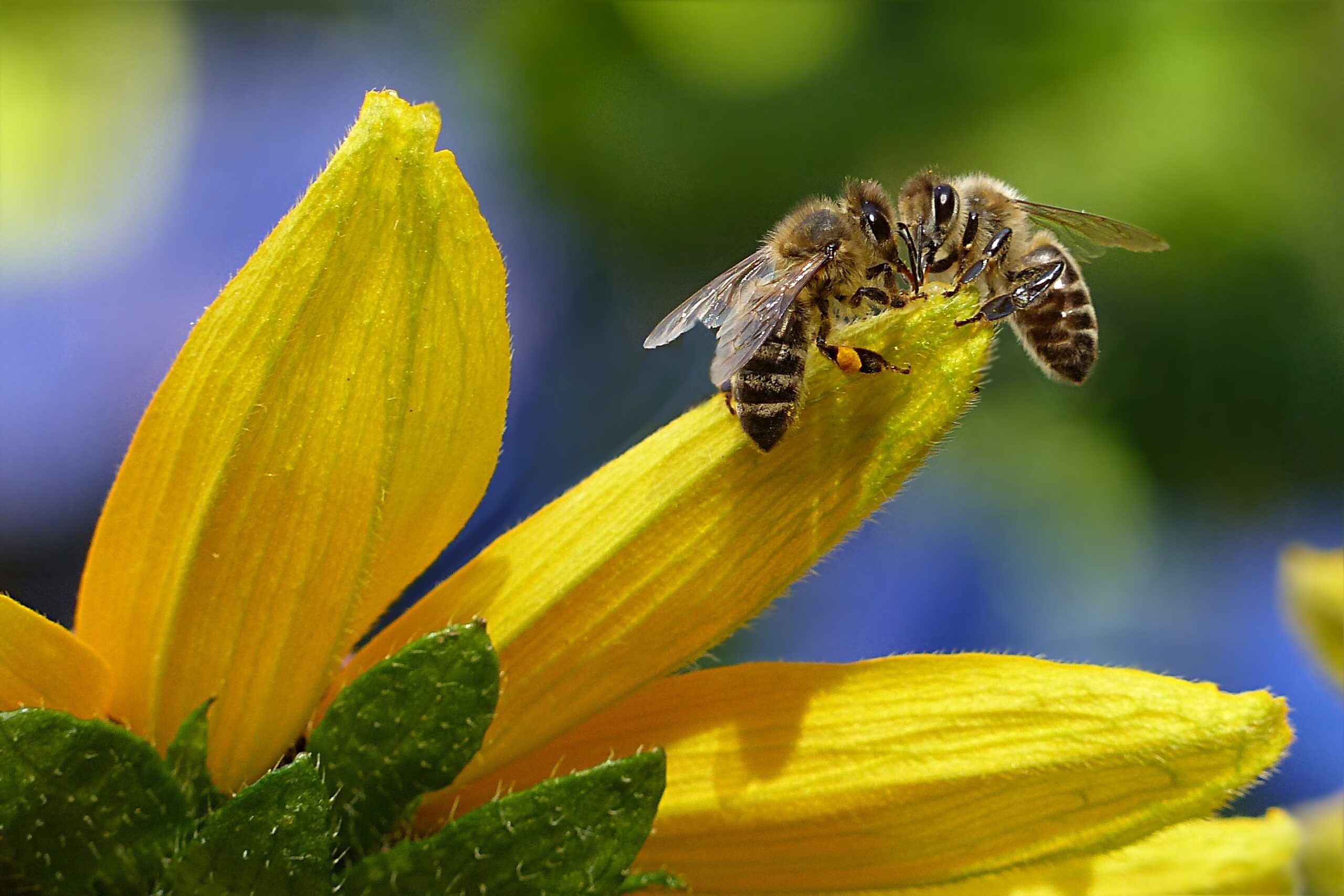
The world of bees is a tapestry woven with diversity, each type contributing in its unique way to the intricate balance of our ecosystems.
From the honey bee’s complex social structure to the solitary carpenter bee’s innovative nesting techniques, the contributions of these pollinators are immeasurable. Understanding and appreciating the various types of bees is crucial for fostering conservation efforts and ensuring the continued well-being of our planet.
So, the next time you hear a gentle buzz in the garden, take a moment to appreciate the incredible variety of bees that play a vital role in sustaining life as we know it.