Feed quality is the foundation of profitable and sustainable livestock production. Yet, improper feed storage remains one of the most overlooked causes of nutrient loss, mold contamination, poor animal performance, and unnecessary farm expenses—especially in warm, humid climates.
As livestock systems become more intensive and climate variability increases, proper feed storage is no longer optional. It is a critical management practice that directly affects animal health, feed efficiency, and farm profitability.
Lets explore modern, science-backed, and climate-smart feed storage practices designed for smallholder farmers, commercial producers, agri-entrepreneurs, and students seeking practical, real-world solutions.
Why Proper Feed Storage Matters in Modern Livestock Farming
Proper feed storage is a critical but often underestimated aspect of successful livestock production. Feed represents the single largest operating cost on most farms, and when it is poorly stored, farmers lose value long before animals even reach the feeding trough.
Research and on-farm experience show that improper feed storage can reduce nutritional value by 10–30%, meaning animals receive fewer nutrients despite the same feeding costs. This hidden loss directly affects animal health, productivity, and farm profitability.
Beyond financial waste, poor feed handling and storage expose livestock to serious health and performance risks:
-
Mold growth and mycotoxin contamination
When feeds are stored in damp, warm, or poorly ventilated conditions, molds develop rapidly. These molds often produce mycotoxins—dangerous compounds that are invisible, odorless, and highly toxic to animals. Even small amounts can cause reduced appetite, liver damage, reproductive problems, and sudden production drops. Long-term exposure weakens animals and increases veterinary costs. -
Reduced palatability and feed intake
Feed that is exposed to moisture, heat, insects, or rodents often develops off-smells, clumping, or visible spoilage. Animals are highly sensitive to changes in taste and smell, and they will often eat less or selectively refuse poor-quality feed. Reduced intake means animals fail to meet their daily nutrient requirements, slowing growth and lowering milk or egg production. -
Digestive disorders and immune suppression
Spoiled or contaminated feed disrupts normal rumen and gut function. This can lead to bloating, diarrhea, acidosis, and poor feed conversion. Over time, toxins and poor-quality nutrients weaken the immune system, making animals more susceptible to infections, parasites, and stress-related diseases—especially in young, pregnant, or high-producing animals. -
Lower milk yield, weight gain, and fertility
When animals consistently consume degraded feed, performance losses are inevitable. Dairy animals produce less milk, meat animals gain weight more slowly, and breeding animals experience poor conception rates and longer calving intervals. These outcomes reduce overall farm efficiency and delay returns on investment.
In an era of rising feed costs, unpredictable weather, and climate stress, protecting every kilogram of feed is no longer optional—it is a strategic priority. Proper feed storage preserves nutrient quality, safeguards animal health, stabilizes production, and ultimately improves farm profitability. For modern livestock farmers, good feed storage is not just about preventing waste; it is about securing the foundation of sustainable and productive farming.
Common Causes of Feed Spoilage on Farms
Feed spoilage rarely happens by accident. In most cases, it results from avoidable storage and handling problems on the farm. Understanding what damages feed is the first and most important step toward preventing losses, protecting animal health, and maintaining consistent production.
Below are the most common causes of feed spoilage and how they affect feed quality:
Moisture and Humidity
Moisture is the number one enemy of stored feed. When feed absorbs water from rain, ground moisture, or humid air, it creates ideal conditions for mold growth and bacterial activity. Stored grains may heat and clump, hay can develop internal mold pockets, and concentrates lose essential nutrients. High moisture levels also accelerate nutrient breakdown, reducing energy and protein availability before animals consume the feed.
Heat and Sunlight
Excessive heat—especially direct sunlight—rapidly degrades feed quality. High temperatures speed up fat oxidation, causing feed to become rancid and unpalatable. Heat also destroys sensitive vitamins such as A, D, and E, reducing the feed’s nutritional value. Warm conditions further encourage insect breeding, increasing contamination and physical damage to stored feed.
Pests and Rodents
Rodents, birds, and insects are major contributors to feed spoilage and wastage. They consume large amounts of feed and contaminate the rest with droppings, urine, feathers, and carcasses. This contamination spreads disease-causing organisms such as Salmonella and Leptospira, posing serious health risks to livestock. Even small pest infestations can result in significant feed losses over time.
Poor Storage Structures
Inadequate storage facilities expose feed to multiple threats at once. Leaking roofs, cracked floors, broken walls, and unsealed containers allow moisture, air, and pests to enter. Poor ventilation traps heat and humidity, further accelerating spoilage. Without proper structures, even high-quality feed deteriorates quickly, leading to avoidable losses and inconsistent feeding results.
By identifying and addressing these common causes, farmers can take practical steps to extend feed shelf life, reduce waste, and ensure animals receive safe, high-quality nutrition every day.
Climate-Smart Feed Storage Principles Every Farmer Should Follow
Climate change has increased temperature extremes, humidity, and unpredictable rainfall, making feed storage more challenging than ever. Climate-smart feed storage focuses on protecting feed quality while reducing waste, losses, and production risks. The following principles help farmers safeguard feed nutrients, improve animal performance, and adapt to changing environmental conditions.
Store Feeds in a Cool, Dry, and Well-Ventilated Area
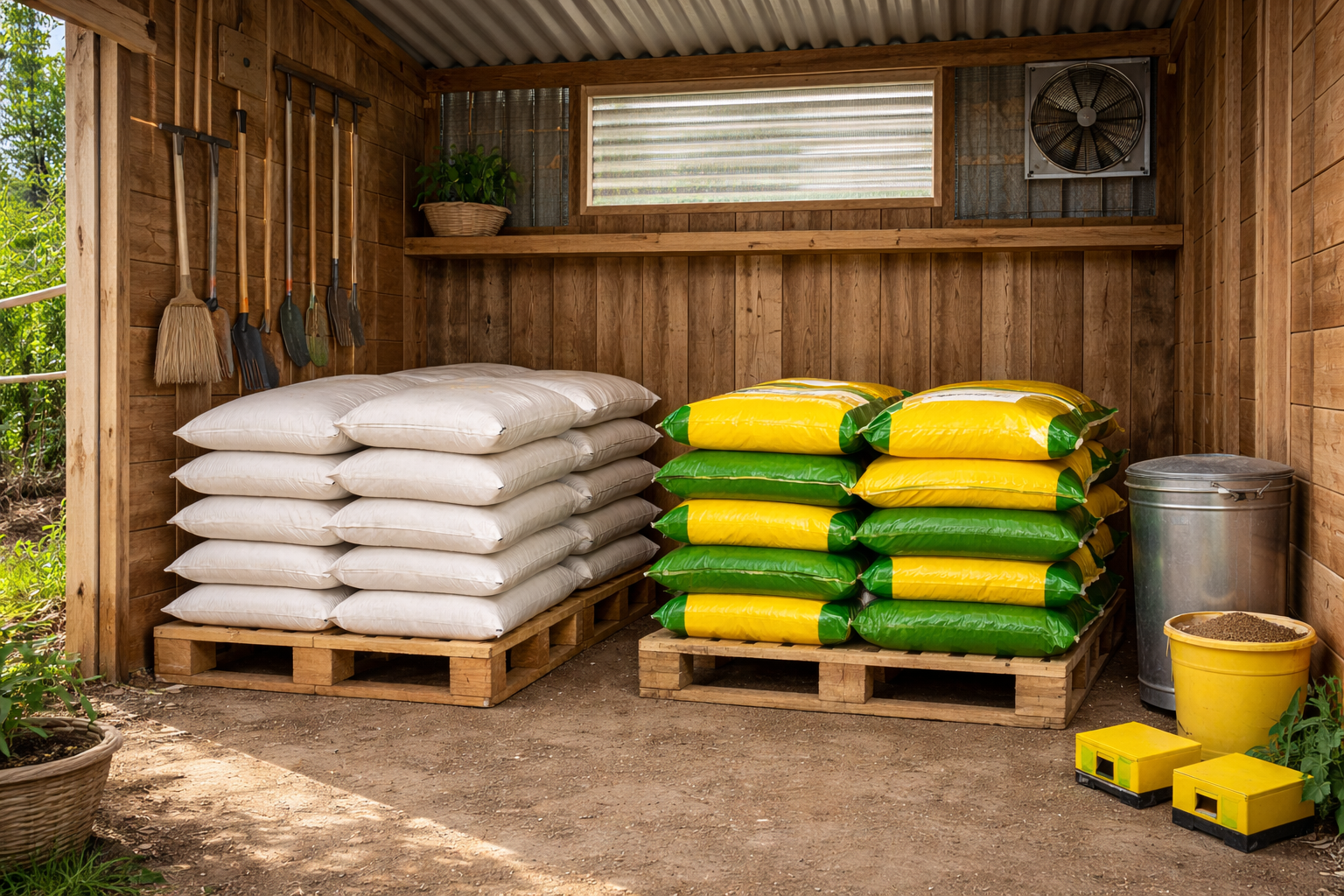
Feed storage areas should be designed to minimize heat and moisture buildup, which are the main drivers of spoilage. Stores should be elevated, dry, and shielded from direct sunlight to prevent condensation and overheating. Good airflow allows excess humidity and heat to escape, keeping feed fresh for longer periods—especially in warm and humid climates.
Best practices include:
-
Raising feed off the ground using pallets to prevent moisture absorption from floors
-
Avoiding storage directly against walls, where condensation often forms
-
Using ventilated or open-sided structures in humid regions to improve air circulation
Use Airtight and Pest-Proof Containers
Modern feed storage technologies play a key role in climate-smart farming by reducing exposure to air, moisture, and pests. Airtight and pest-proof containers help preserve nutrients, prevent mold growth, and reduce contamination from insects and rodents.
Recommended options include:
-
Plastic or metal silos for bulk grain storage
-
Airtight drums or bins for concentrates and supplements
-
Hermetic storage bags for smallholder and low-input farming systems
These methods are increasingly promoted in climate-smart agriculture programs because they significantly reduce post-harvest losses, improve feed safety, and protect farmer investments.
Apply First-In, First-Out (FIFO) Feed Management
Good storage must be paired with good management. The First-In, First-Out (FIFO) principle ensures that older feed is used before newer stock, reducing the risk of long storage periods that increase spoilage, nutrient loss, and contamination.
Practical tip:
Clearly label all feed bags, bins, or containers with delivery or milling dates so workers can easily identify which feed should be used first.
Protect Hay and Forage from Moisture
Hay and forage are particularly vulnerable to moisture damage, and poorly stored forage is a leading cause of mold growth and mycotoxin exposure in livestock. Moisture trapped in bales can also cause internal heating, increasing fire risk and nutrient destruction.
Best forage storage practices include:
-
Storing hay under a roof or waterproof cover to protect it from rain and dew
-
Keeping bales off the ground using pallets, stones, or raised platforms
-
Allowing forage to dry properly before storage to reduce internal moisture
-
Regularly monitoring tightly packed stacks for heating or musty odors
By following these climate-smart feed storage principles, farmers can reduce feed losses, protect animal health, and build more resilient livestock systems in the face of climate variability.
Preventing Mold and Mycotoxins in Stored Feeds
Mycotoxins are invisible, odorless, and extremely dangerous compounds produced by certain molds that grow in poorly stored feeds. Even at very low levels, mycotoxins can cause serious problems such as reduced productivity, abortions, weak newborns, poor feed conversion, and long-term immune suppression. Because animals may continue eating contaminated feed without obvious refusal, mycotoxin damage often goes unnoticed until performance drops or disease outbreaks occur.
Effective prevention focuses on eliminating the conditions that allow mold to grow and detecting problems early before animals are exposed.
Practical Prevention Strategies
-
Never store damp feeds
Moisture is the primary trigger for mold growth. Grains, concentrates, and forage must be adequately dried before storage. Even slightly damp feed can heat internally and become contaminated within days, especially in warm climates. -
Clean storage areas regularly
Old feed residues, dust, and spills provide an ideal breeding ground for mold and fungi. Regular cleaning of floors, walls, bins, and containers reduces contamination and prevents mold spores from spreading to fresh feed. -
Avoid mixing spoiled feed with fresh feed
Mixing contaminated feed with good feed spreads mold and mycotoxins throughout the entire batch. This practice turns a small loss into a large one and greatly increases the risk of animal exposure. -
Use approved mold inhibitors when necessary
In high-risk conditions—such as humid seasons or long storage periods—approved mold inhibitors or preservatives can help slow mold growth. These should be used according to manufacturer guidelines and as part of an overall feed safety plan, not as a substitute for good storage practices. -
Conduct periodic feed inspections
Regular visual and physical checks help catch problems early. Inspect feeds for changes in color, texture, smell, and temperature, especially in bulk storage and tightly packed feeds.
Early detection is critical. If feed smells musty, feels unusually warm, shows clumping, or has visible discoloration, it should never be fed to animals. Removing suspect feed promptly protects livestock health and prevents wider contamination.
Smart Technologies Improving Feed Storage Today
Advances in smart farming and digital agriculture are transforming how farmers manage and protect stored feeds. These technologies help reduce losses, improve feed safety, and support more efficient decision-making.
Emerging Trends Include:
-
Temperature and humidity sensors in feed stores
Real-time monitoring alerts farmers to conditions that promote mold growth, allowing early intervention before spoilage occurs. -
Digital inventory tracking systems
These systems improve feed traceability, support FIFO management, and reduce overstocking or prolonged storage periods. -
Mobile apps for feed rotation planning
Apps help farmers schedule feed use, monitor stock levels, and reduce human error in daily feeding operations. -
Solar-powered ventilation systems
Energy-efficient ventilation helps regulate temperature and humidity in feed stores, especially in off-grid or remote farming areas.
By combining good storage practices with smart technologies, farmers can significantly reduce feed spoilage, protect animal health, and build more resilient and profitable livestock operations.
Feed Storage Tips by Feed Type
Different feeds have different storage risks. Applying feed-specific storage practices helps preserve nutrients, prevent contamination, and maintain consistent animal performance.
Concentrates and Commercial Feeds
Concentrates are highly processed and nutrient-dense, making them more vulnerable to moisture, heat, and contamination.
-
Store in sealed bags or bins to limit exposure to air, humidity, and pests, which accelerate spoilage.
-
Keep away from chemicals and fuels such as pesticides, fertilizers, diesel, or oils. These substances can contaminate feed through fumes or spills and pose serious poisoning risks.
-
Avoid long-term storage beyond manufacturer recommendations, as vitamins and fats degrade over time, reducing feed effectiveness even if no visible spoilage is present.
Grains
Grains are a major energy source but are highly sensitive to moisture and insect damage.
-
Dry thoroughly before storage to prevent heating, mold growth, and mycotoxin development.
-
Use hermetic bags or silos to block oxygen, suppress insect activity, and stabilize grain quality during storage.
-
Monitor for insects regularly, as early infestations spread quickly and increase both physical losses and contamination risk.
Silage
Silage quality depends entirely on proper fermentation and airtight storage.
-
Ensure proper compaction to remove air and promote efficient fermentation. Poor compaction leads to spoilage and nutrient loss.
-
Seal airtight immediately after filling to prevent oxygen entry, which causes heating and mold growth.
-
Repair damaged plastic promptly, as even small holes allow air and water in, rapidly spoiling large sections of silage.
Common Feed Storage Mistakes Farmers Should Avoid
Many feed losses come from small, repeated mistakes that seem harmless but accumulate into major production problems:
-
Storing feed directly on the floor, which allows moisture absorption and pest access
-
Mixing old and new feed batches, spreading spoilage and increasing contamination risk
-
Ignoring minor leaks or early moisture signs, which quickly escalate into mold problems
-
Delaying disposal of spoiled feed, exposing animals to toxins and spreading contamination
-
Overbuying feed without adequate storage capacity, leading to prolonged storage and quality decline
These small mistakes often lead to big production losses, poor animal performance, and higher veterinary costs.
Proper feed storage plays a critical role in safeguarding animal health while protecting farm profitability, especially as livestock systems face increasing climate-related stresses. Adopting climate-smart storage solutions is no longer optional in modern farming, as even simple, low-cost practices can significantly reduce feed spoilage and prevent expensive losses. When good management practices are combined with the right technologies, farmers can build resilient, efficient, and sustainable feeding programs that support long-term success.